Bringing Butterflies in the Mushroom Forest to Life: A Crafter's Guide to 3D Shadow Boxes
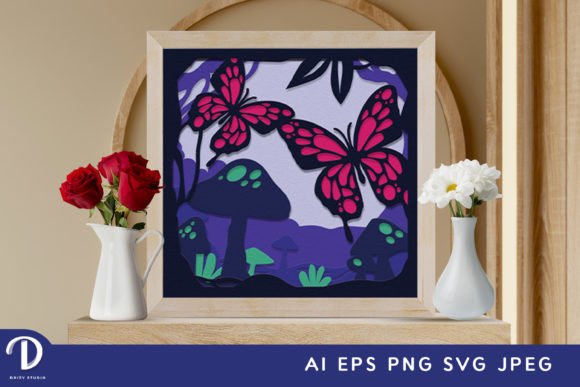
There is a specific kind of satisfaction that comes from turning a flat sheet of paper into a world with depth. It's that moment when you peel back the layers, apply a strip of double-sided tape, and suddenly, a butterfly isn't just an image; it's hovering in front of a mushroom cap, casting a real shadow. This is the core appeal of the Butterflies in the Mushroom Forest 3D paper cut template. For anyone who has spent hours scrolling through digital marketplaces looking for a project that feels both manageable and impressive, this design hits a sweet spot between whimsical nature art and technical precision.
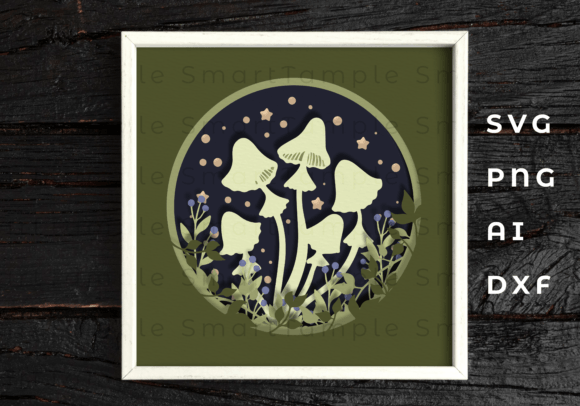
At its heart, this product is a layered, square paper-cutting template designed to create a wildlife shadow box. While the file names might sometimes get mixed up in broad searches—occasionally cross-referenced with similar wildlife themes like a "Tiger in The Forest"—the actual content here is focused on the delicate interplay of flora and fauna. You receive a comprehensive package including AI, EPS, PNG, SVG, and JPEG formats, all calibrated to work seamlessly whether you are a digital designer tweaking vectors or a hobbyist ready to break out the craft knife.
Why This Design Works for Modern Makers
The magic of Butterflies in the Mushroom Forest lies in its versatility. We often think of paper crafts as purely decorative items for our own living rooms, but the utility of a well-structured 7-layer template extends far beyond personal décor. The design comes in a standard 20.32×20.32 cm (roughly 8x8 inches) format, which is ideal because it fits perfectly into standard deep-frame shadow boxes available at most craft stores. You aren't hunting for obscure frame sizes; you can walk into a store today and find the hardware you need.
For the home crafter, the process is meditative. Whether you own a Silhouette or Cricut machine, or if you prefer the tactile feel of an X-Acto knife and scissors, the files are ready. The SVG file included allows cutting machines to handle the intricate details of the butterfly wings and mushroom gills, saving you hours of manual labor. However, if you don't have a machine, the high-resolution JPEG (3000 x 2000 px) and PDF-friendly vectors ensure you can print and cut by hand without losing definition. The requirement is simple: glue or double-sided tape, patience, and a steady hand.
Real-World Applications Beyond the Living Room
Let's talk about where this actually ends up once it's assembled. The obvious answer is above a sofa or on a nursery wall, but consider the broader applications for entrepreneurs and educators.
- Boutique Retail and Pop-Up Shops: Small business owners selling handmade goods often struggle with window displays that look cheap or temporary. A series of these shadow boxes, perhaps illuminated with LED strips sandwiched between the seven layers, creates a glowing, high-end focal point. It signals to customers that attention to detail matters in this shop.
- Educational Settings: Teachers and homeschooling parents can use the layered structure to teach biology concepts. By assembling the layers one by one, students can visualize ecosystems, understanding how foreground elements (butterflies) interact with background habitats (mushrooms and forest floors). It turns a static image into a lesson on depth and habitat layering.
- Gifting with Impact: We've all been there—searching for a gift for a friend who loves nature but already has enough mugs and candles. Assembling this kit into a finished lightbox offers a personalized touch. It shows effort. Adding a custom message on the backing board transforms it from a craft project into a cherished memory keeper.
- Content Creation and Photography: Bloggers and Instagram influencers constantly need fresh backdrops. A physical 3D paper scene provides texture that digital filters cannot replicate. Photographing products against the textured layers of the Butterflies in the Mushroom Forest adds an organic, whimsical vibe to product shots for jewelry, skincare, or books.
Technical Considerations Before You Start
Before you download and dive in, there are practical realities to consider to ensure your project succeeds. First, understand the file formats. If you plan to resize the design to fit a larger frame, you must maintain the aspect ratio. Stretching the image will distort the delicate lines of the butterfly wings and ruin the alignment of the seven layers. The SVG file is your best friend here, as it scales infinitely without pixelation, whereas the PNG and JPEG have fixed resolutions.
Material choice is another critical factor. While the template tells you where to cut, it doesn't dictate what to cut. For a crisp shadow effect, cardstock between 65lb and 80lb is usually the gold standard. Anything thinner might warp when glued, and anything thicker becomes difficult to layer tightly within a standard frame. If you intend to create a lightbox effect using LED strips, remember that lighter colored paper will diffuse the glow softly, while darker tones will create dramatic silhouettes. Experimentation is key, but having a plan prevents wasted materials.
Additionally, consider the assembly environment. Because this involves seven distinct layers, you need a clean, flat surface. Dust motes trapped between layers become glaringly obvious once the frame is sealed, especially if you add lighting. Take your time with the spacing; the depth of the shadow relies on consistent gaps between each tier of paper.
The Emotional Value of Handmade Depth
In a world dominated by flat screens and digital interfaces, there is a profound reconnecting power in holding something three-dimensional. The Butterflies in the Mushroom Forest isn't just about the final product; it's about the hour or two you spend focusing on nothing but the curve of a wing or the texture of a mushroom stem. For freelancers and remote workers battling burnout, this type of focused, low-stakes creativity can be a reset button for the brain.
Furthermore, for those looking to monetize their crafting skills, this template offers a scalable solution. Since the files are reusable, you can produce multiple units for craft fairs or Etsy shops. The "wildlife shadow box" niche is perennially popular, and the specific combination of butterflies and mushrooms taps into the current trend of cottagecore and biophilic design—bringing the outdoors inside. By mastering the assembly of this specific design, you develop a workflow that can be applied to other complex layered projects, increasing your production efficiency over time.
Ultimately, whether you are framing it as a gift for a family member, using it to teach a child about nature, or selling it as part of a curated home décor collection, the value remains the same. It bridges the gap between digital convenience and analog beauty. You get the precision of a computer-generated vector file with the soul of a hand-assembled artifact. Just remember to check your layer alignment before gluing, keep your aspect ratio locked, and enjoy the process of watching a flat design rise into a forest of its own.