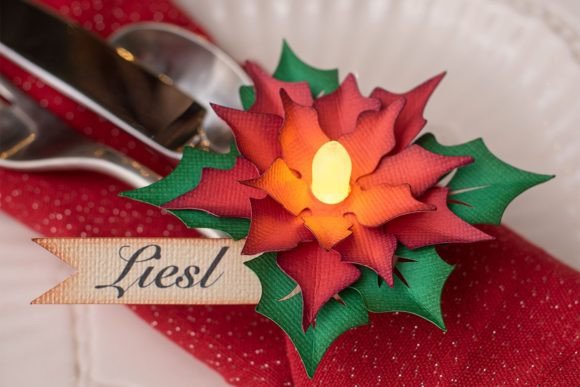
Illuminate Holidays with a Poinsettia Tea Light
There is something undeniably magical about the soft, flickering glow of a candle during the winter months. It transforms a cold room into a sanctuary of warmth and invites a sense of calm that defines the holiday spirit. However, traditional wax candles can be messy, pose safety risks around pets or children, and eventually burn down. This is where the Poinsettia Tea Light project shines as a brilliant alternative. By combining the timeless beauty of the Christmas poinsettia with the safety of battery-operated lighting, this craft offers a sustainable way to decorate your home year after year.
At its core, this project is a layered paper sculpture designed to house a standard flameless tealight. Inspired by the classic red and green hues of the season, the design utilizes multiple layers of cardstock to create depth and dimension. When the light is switched on, it doesn't just sit on top of the paper; it interacts with it. The glow filters through the carefully cut petals and leaves, casting intricate shadows and highlighting the texture of the material. The result is a centerpiece that feels alive, offering a festive ambiance that static decorations simply cannot match.
Why Choose a Paper Luminary for Your Decor
For many crafters and homeowners, the appeal of the Poinsettia Tea Light lies in its perfect balance of tradition and modern convenience. Unlike store-bought plastic decor that often looks mass-produced, a handmade paper luminary carries a personal touch. It allows you to control every aspect of the aesthetic, from the specific shade of red used for the petals to the type of green chosen for the foliage. This level of customization ensures that the piece fits seamlessly into your existing holiday theme, whether you prefer a rustic farmhouse look or a sleek, contemporary style.
Beyond aesthetics, there are practical reasons to embrace this project. Safety is a primary concern during the busy holiday season. With open flames being a leading cause of winter fires, switching to battery-operated tea lights inside a paper structure eliminates that risk entirely. You can place these luminaries on a mantel near dried greens, on a dining table surrounded by fabric napkins, or even on a bookshelf without worry. Furthermore, because the "candle" is reusable and the paper structure is durable if handled with care, this is an eco-friendlier option compared to single-use wax candles that drip and waste away.
Ideal Uses for Seasonal Ambiance
The versatility of this design makes it suitable for a wide range of settings. For the home decorator, it serves as an elegant accent piece. Imagine lining a hallway with several of these glowing flowers, creating a warm path for guests. On a dinner table, they act as intimate centerpieces that provide enough light for conversation without overwhelming the meal. Because the completed project measures approximately 1.25 inches in height with a 4-inch width and depth, it is compact enough to fit in tight spaces where larger decorations might feel cluttered.
This project also holds significant value for small business owners and entrepreneurs looking to sell handmade goods. Holiday markets are bustling with shoppers seeking unique, artisanal gifts. A set of these Poinsettia Tea Lights, perhaps packaged in a clear box with a ribbon, makes for a thoughtful gift for teachers, neighbors, or hosts. The perceived value of a hand-assembled, light-up decoration is high, yet the material costs remain relatively low, offering a healthy margin for creators. Additionally, educators can use this as a engaging seasonal activity for older students, teaching them about layering, light physics, and fine motor skills in a fun, festive context.
Getting Started: Materials and Preparation
One of the most satisfying aspects of this craft is its accessibility. You do not need an extensive inventory of supplies to create a professional-looking result. The project is designed with standard materials in mind, making it easy to source everything from a local craft store. To replicate the look shown in the tutorial, you will need specific colors to capture the holiday essence:
- Cherry Cardstock: One sheet of 8.5x11 inch paper provides the vibrant red needed for the iconic poinsettia petals.
- Emerald Cardstock: One sheet of 8.5x11 inch paper creates the contrasting green leaves that ground the design.
- Vanilla Cardstock: One sheet of 8.5x11 inch paper is often used for the base or inner layers to help reflect the light more effectively.
- Flameless Tealight: A standard 1.5-inch diameter battery-operated candle is essential for the illumination.
- Ink Glue: A precision glue pen or liquid ink glue is recommended for clean bonds without visible residue.
It is important to note the quality of your materials. The reference design utilizes 80 lb cover (216 gsm) cardstock. This weight is crucial; it is thick enough to hold its shape and resist warping from the slight heat of the LED bulb, yet thin enough to allow light to permeate softly. Using paper that is too thin may result in a flimsy structure, while paper that is too thick might block the glow entirely.
Working with Digital Files and Cutting Machines
For those new to digital crafting, the process begins with the file itself. This project is delivered in SVG format, which stands for Scalable Vector Graphics. Unlike pixel-based images that become blurry when enlarged, SVG files use mathematical paths to define shapes, ensuring crisp cuts at any size. This makes the Poinsettia Tea Light fully compatible with popular cutting machines like Cricut or Silhouette, as well as various design software programs.
The design is optimized for 12x12 cutting mats, which is the industry standard for hobbyist machines. However, flexibility is built into the file. If you have a smaller machine or wish to create miniature versions for a advent calendar, you can resize the project to fit your needs. Just keep in mind that resizing will alter the final dimensions, so you may need to adjust the size of the tea light or the number of layers to maintain structural integrity. To assist with assembly, a PDF legend is included. This guide helps you identify which piece goes where, taking the guesswork out of the layering process and ensuring your flower looks symmetrical and balanced.
Tips for a Flawless Finish
While the concept is straightforward, a few practical observations can elevate your final product. First, pay attention to the order of your layers. The magic of this design comes from the staggered arrangement of petals. Rushing this step can lead to a flat appearance. Take your time to adhere each layer precisely, using the PDF legend as your roadmap. Second, consider the placement of your tea light. Ensure it sits snugly in the center so the light distributes evenly across all petals. If the fit is loose, a small dab of removable adhesive putty on the bottom of the candle can secure it without damaging the paper.
Finally, think about longevity. While the paper is durable, dust can accumulate in the crevices of the layered petals over time. A gentle blast of compressed air or a soft brush can keep your Poinsettia Tea Light looking pristine throughout the season. When the holidays are over, simply remove the battery from the tealight and store the paper structure in a flat, dry place. With proper care, this charming blend of tradition and craft can brighten your home for many Decembers to come, proving that sometimes the simplest projects yield the most beautiful results.