Crafting Connection: The Art and Utility of the Pet Paw Card SVG
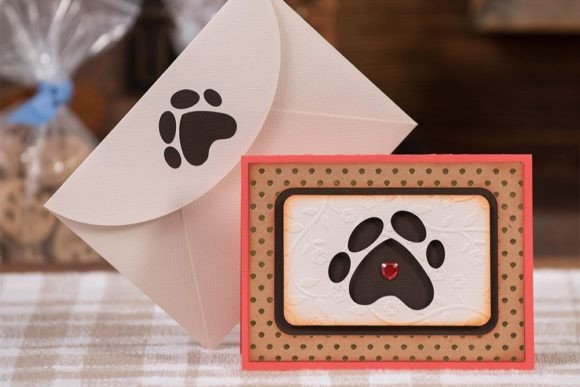
In the realm of handmade sentiments, few projects bridge the gap between technical precision and emotional resonance quite like a well-designed layered paper card. For crafters, small business owners, and hobbyists alike, the Pet Paw Card represents more than just a cutting file; it is a versatile tool for communication. Whether utilized by a veterinary clinic to thank a client, an animal shelter celebrating an adoption, or an individual expressing sympathy for a lost companion, this design offers a modern aesthetic that speaks universally to animal lovers. By leveraging the capabilities of SVG technology, creators can produce professional-grade cards that feel deeply personal.
The shift toward digital cutting files has transformed how we approach paper crafting. No longer limited to pre-printed store-bought options, makers can now customize every element of a project. The Pet Paw Card SVG exemplifies this freedom. It provides a foundational structure—a clean, layered paw print design—that serves as a canvas for creativity. This article explores the practical applications, material considerations, and assembly workflows associated with this specific design, offering a comprehensive guide for anyone looking to integrate it into their crafting repertoire or business offerings.
Versatility in Application: Beyond the Birthday Greeting
One of the most compelling characteristics of the Pet Paw Card is its adaptability across various occasions. While many crafting files are niche-specific, a paw print motif transcends single events, making it a high-utility asset for creators. Understanding where and how to deploy this design is key to maximizing its value.
- Veterinary Appreciation: Vet clinics often struggle to find unique ways to thank staff or acknowledge loyal clients. A handmade card featuring this design, perhaps paired with a gift card or a treat sample, adds a touch of warmth that mass-produced stationery lacks.
- Adoption Celebrations: Animal rescues and shelters can use these cards as part of an "adoption kit." When a family takes home a new pet, receiving a card with a layered paw print reinforces the significance of the moment and provides a keepsake.
- Sympathy and Condolences: Losing a pet is a profound experience. The clean lines and soft layering of this design allow for a dignified, respectful expression of sympathy without being overly ornate.
- General "Just Because" Sentiments: Sometimes, the best reason to send a card is simply to share "puppy love." The modern aesthetic fits well with casual check-ins among friends who share a passion for animals.
For educators and researchers in the field of art therapy or community building, projects like this serve as excellent case studies in how shared interests (in this case, pets) can foster connection through tangible objects. The act of creating and giving a Pet Paw Card becomes a ritual of care.
Technical Specifications and File Compatibility
From a technical standpoint, the success of any cutting project relies heavily on the quality and format of the digital file. The Pet Paw Card is distributed exclusively in SVG format. This choice is deliberate and crucial for interoperability. SVG (Scalable Vector Graphics) ensures that the design remains crisp and precise regardless of how much it is resized, a distinct advantage over raster images like JPEGs or PNGs which can pixelate.
This file type is fully compatible with all major SVG-ready cutting machines and software ecosystems. Whether a user operates a desktop-based program or a cloud-connected cutter, the vector paths translate accurately, ensuring clean cuts for intricate layers. The design is optimized for standard 12×12 cutting machines, which are the industry workhorses for cardstock crafting. However, the scalability of the SVG format means that users with smaller 6×12 machines can also utilize the design by resizing the components to fit their mat dimensions, provided they maintain the aspect ratio to prevent distortion.
Accompanying the SVG file is a PDF legend. This document is an essential, yet often overlooked, component of complex layered projects. It acts as a visual key, helping users identify which vector piece corresponds to which layer of the final assembly. For beginners, this eliminates guesswork and reduces material waste, while experienced crafters appreciate the efficiency it brings to the workflow.
Dimensions and Scaling Considerations
The completed Pet Paw Card measures approximately 4.625" H x 6.25" W. These dimensions offer a non-standard but highly elegant profile, distinguishing it from the typical A2 or A6 cards found in retail stores. This unique size makes the card stand out in a mailbox or on a display table.
Users should note that while the project is resizable to fit specific needs, altering the dimensions will affect the final outcome. If the design is scaled up significantly for a poster or down for a tag, the relative thickness of the cut lines and the spacing between layers may require adjustment in the software to ensure structural integrity. It is advisable to perform a test cut on scrap paper when deviating substantially from the original dimensions.
Material Selection and Supply Chain Insights
The tactile quality of a handmade card is dictated by the materials used. For the Pet Paw Card, the supply list calls for specific weights and textures to achieve the intended layered effect. The foundation of this project is high-quality cardstock, specifically Encore Cardstock 80 lb cover (216 gsm).
Why is paper weight so critical? In layered designs, thinner papers can warp under the weight of adhesive or fail to hold the dimensionality of the embossing. The 80 lb cover stock provides the necessary rigidity to support foam adhesive squares and rhinestones without buckling. Furthermore, this weight accepts ink and embossing folder textures beautifully, allowing for depth that lighter papers cannot achieve.
Recommended Supply List
To replicate the design as intended, the following inventory is required. Note that color choices can be customized, but the contrast between the base and the layers is vital for the paw print to pop.
- Base Structure: 2 Sheets of 12x12 Vanilla Cardstock. This neutral tone serves as the canvas, ensuring the colored layers stand out.
- Primary Accent: 1 Sheet of 8.5x11 Cherry Cardstock. A bold red or warm tone often works well here to draw the eye to the central motif.
- Secondary Accent: 1 Sheet of 8.5x11 Coffee Cardstock. Earth tones provide a natural grounding element, mimicking the colors often associated with animals.
- Pattern Element: 1 Sheet of 8.5x11 Dotted Pattern Paper. Introducing a pattern breaks up the solid colors and adds visual interest to the background layers.
- Embellishments: Rhinestones and Embossing Folder Ink. These add sparkle and texture, elevating the card from a simple craft to a finished product.
- Assembly Hardware: Foam Adhesive Squares and Glue. Foam squares are non-negotiable for this design; they create the physical separation between layers that defines the "3D" look.
For business owners sourcing materials, consistency is key. Using the same brand and weight of cardstock (such as the specified Encore line) ensures that color matching remains accurate across multiple production runs. Variations in paper brightness or texture between brands can alter the final appearance of the layered effect.
The Assembly Workflow: From Digital File to Physical Object
Transforming the Pet Paw Card SVG into a finished product involves a systematic workflow. While the cutting process is automated, the assembly requires a steady hand and an understanding of spatial relationships.
- Preparation and Cutting: Import the SVG into your preferred software. Use the PDF legend to assign colors to each layer if your software does not automatically recognize them. Load the appropriate cardstock onto the cutting mat, ensuring it is securely adhered to prevent shifting during the cut. Execute the cut settings recommended for 80 lb cover stock.
- Texturing: Before assembling, run the background layers through an embossing folder. This step adds a subtle texture that catches the light and adds sophistication. Apply ink to the edges of the embossed pieces if a distressed or defined look is desired.
- Layering Strategy: Begin with the largest background piece (Vanilla). Apply foam adhesive squares to the back of the next layer (perhaps the Dotted Pattern). Carefully align and press down. Repeat this process, working from the largest layer to the smallest. The use of foam squares creates shadows between the layers, enhancing the visibility of the paw print shape.
- Final Embellishment: Once the main structure is assembled, attach the rhinestones. A single rhinestone placed strategically on the paw print or near the sentiment can act as a focal point. Allow the glue to set completely before handling.
For those new to this process, a step-by-step video tutorial is often included with such designs. Visual guides are invaluable for understanding the order of operations, especially when dealing with multiple similar-looking layers. Watching the assembly in real-time helps clarify how the foam adhesive impacts the overall height and stability of the card.
Quality Control and Professional Finish
When producing these cards for sale or professional distribution, quality control is paramount. Inspect each cut piece for "weeds" (small bits of paper that didn't fully detach) and ensure that the corners are sharp. The alignment of layers must be precise; even a millimeter of offset can disrupt the symmetry of the paw print. Additionally, ensure that the foam adhesive is hidden from the front view. The goal is a seamless integration of elements where the mechanics of construction are invisible, leaving only the aesthetic impact.
Economic and Creative Value for Makers
For the independent creator or small business owner, the Pet Paw Card offers a favorable balance of effort and value. Because the design is digital, the overhead cost is limited to materials and machine time. The ability to produce a high-perceived-value item using standard 12x12 cardstock makes it an economically viable product for craft fairs, Etsy shops, or local boutique consignment.
Moreover, the design encourages customization. A maker could easily swap the "Cherry" and "Coffee" colors for school colors, holiday themes, or brand-specific palettes. This flexibility allows the Pet Paw Card to evolve with market trends without requiring a new design purchase. It is a sustainable model for content creation, where one core asset generates endless variations.
In conclusion, the intersection of digital precision and analog craftsmanship found in the Pet Paw Card SVG highlights the enduring appeal of handmade goods. It serves as a reminder that technology, when applied thoughtfully, enhances rather than replaces the human touch. Whether used to comfort a grieving pet owner or celebrate a new addition to a family, this project stands as a testament to the power of thoughtful design and the universal language of love for animals. By mastering the materials, understanding the file specifications, and refining the assembly technique, creators can deliver sentiments that truly resonate.